Terraformation of Venus - AI Simulation (files in the links)
Date of release: 2026-06-28T20:12:25
Article short description:
Proposed Venusian terraformation simulation shows the the most promising method to terraform venus is to create an new species from spacious which lives on planet Earth. Such a self-replicating spacious can thrive in Venusian environment changing it conditions into nearly the same as on Earth. The spacious create for this purpose has been named here in that article as “Neo-Chroothalassa venusis” and it has following donors from planet Earth: Chroococcidiopsis, Sulfolobus acidocaldarius, Deinoco
Full article:
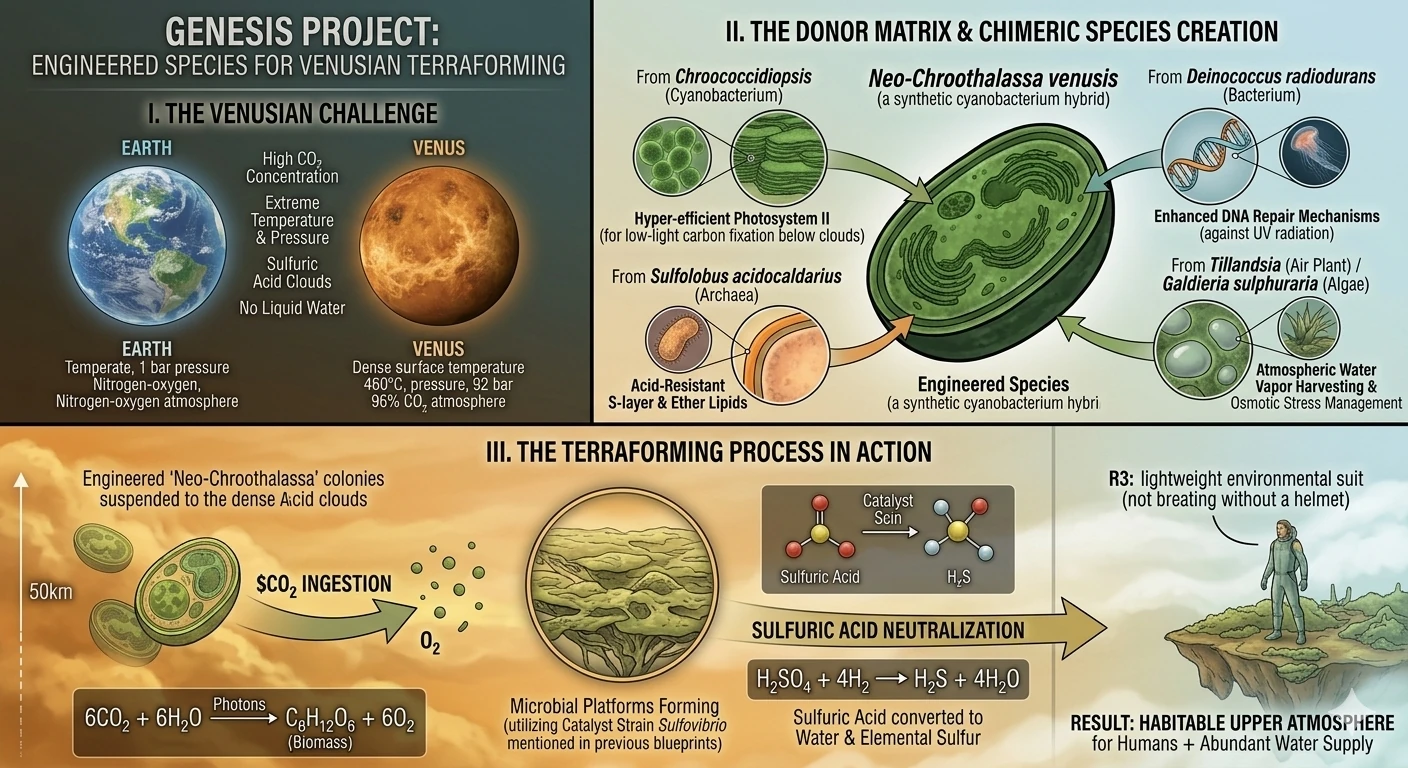
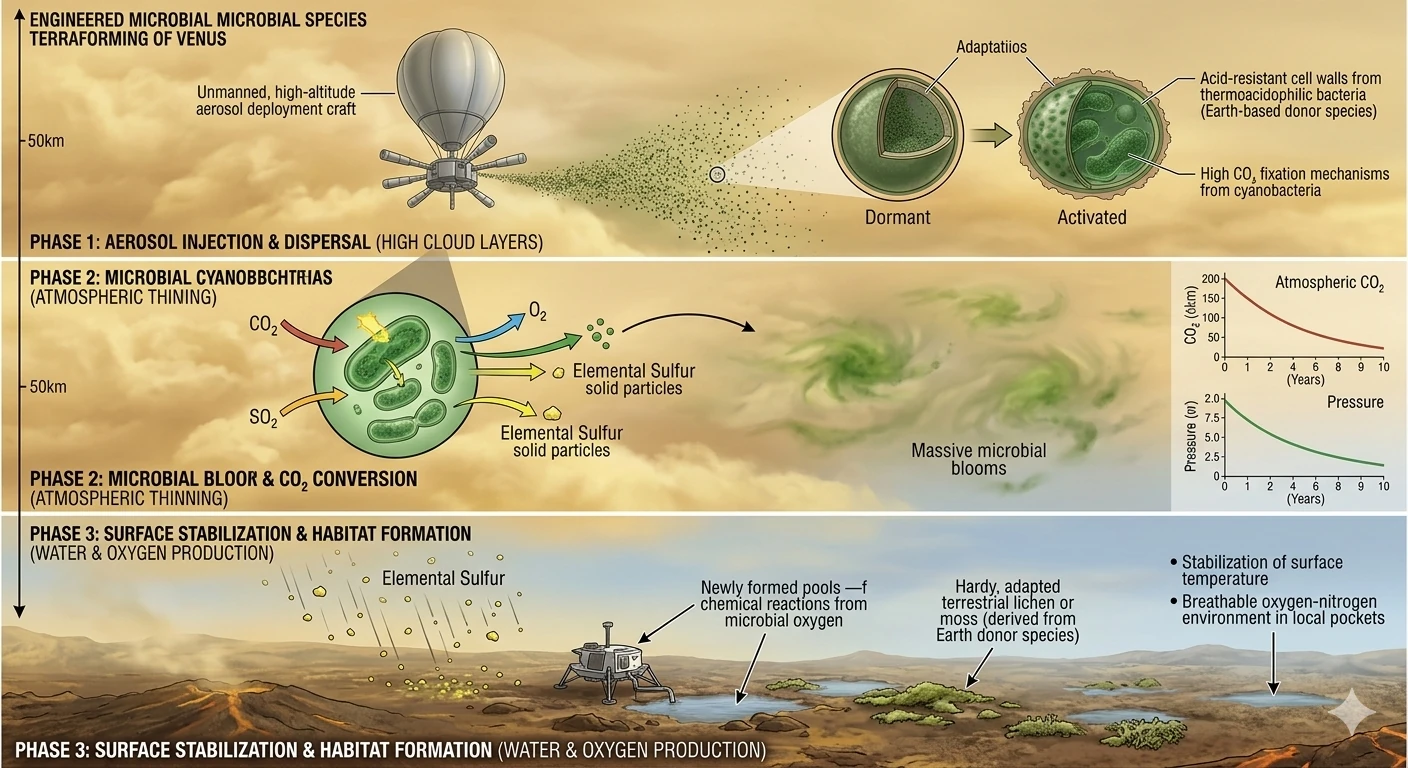
Proposed Venusian terraformation simulation shows the the most promising method to terraform venus is to create an new species from spacious which lives on planet Earth. Such a self-replicating spacious can thrive in Venusian environment changing it conditions into nearly the same as on Earth. The spacious create for this purpose has been named here in that article as “Neo-Chroothalassa venusis” and it has following donors from planet Earth: Chroococcidiopsis, Sulfolobus acidocaldarius, Deinococcus radiodurans, Galdieria sulphuraria, Macrocystis pyrifera. The simulation shows that over a time planet would have change its atmosphere completely to similar to Earth’s once with oceans, rivers, lakes and seas.

Neo-Chroothalassa Venusis donors and extracted features:

Chroococcidiopsis (Cyanobacteria)
Natural Habitat: Hyper-arid hyper-saline deserts
Extracted Trait Genetic: Hyper-efficient Photosystem II core
Engineered Purpose Terraforming: Drives the primary carbon fixation engine, extracting CO2 from the atmosphere using restricted sunlight.

Sulfolobus acidocaldarius (Archaea)
Natural Habitat: Terrestrial acidic hot springs (pH2)
Extracted Trait Genetic: S-layer proteins and ether-linked membrane lipids
Engineered Purpose Terraforming: Provides absolute structural integrity against concentrated sulfuric acid (H SO ) cloud 2 4layers.

High ionizing radiation environments
Natural Habitat: High ionizing radiation environments
Extracted Trait Genetic: Multi-copy DNA repair enzymes (IrrE protein networks)
Engineered Purpose Terraforming: Protects the synthetic clade against unshielded solar UV radiation due to the lack of a planetary magnetosphere.

Galdieria sulphuraria (Red Algae)
Natural Habitat: Volcanic calderas
Extracted Trait Genetic: Glycerol-3 phosphate dehydrogenase pathways
Engineered Purpose Terraforming: Enables metabolic survival in ultra-low moisture environments, reclaiming trace atmospheric water vapor.

Macrocystis pyrifera (Giant Kelp)
Natural Habitat: Coastal marine kelp forests
Extracted Trait Genetic: Pneumatocysts (gas bladder formation)
Engineered Purpose Terraforming: Allows the biomass to remain naturally buoyant, keeping
colonies safely suspended above the hostile lower atmosphere


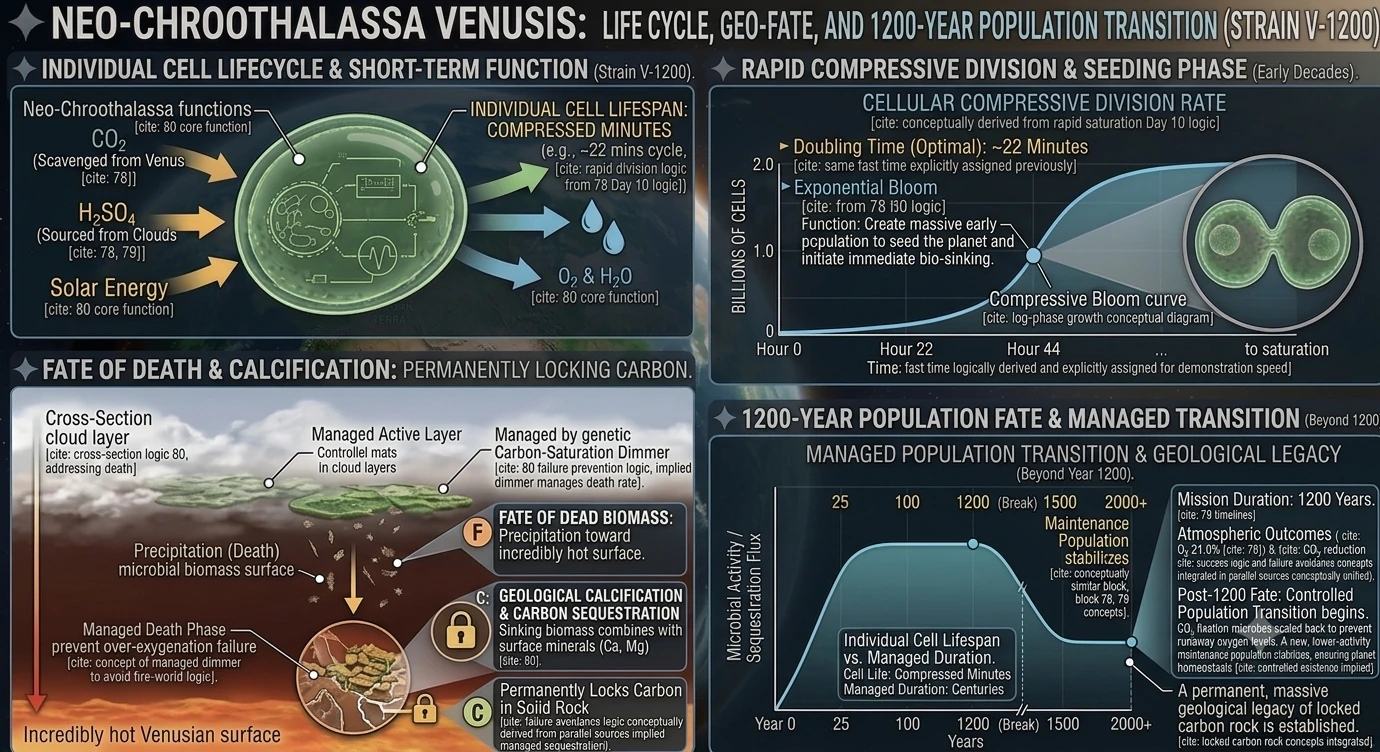
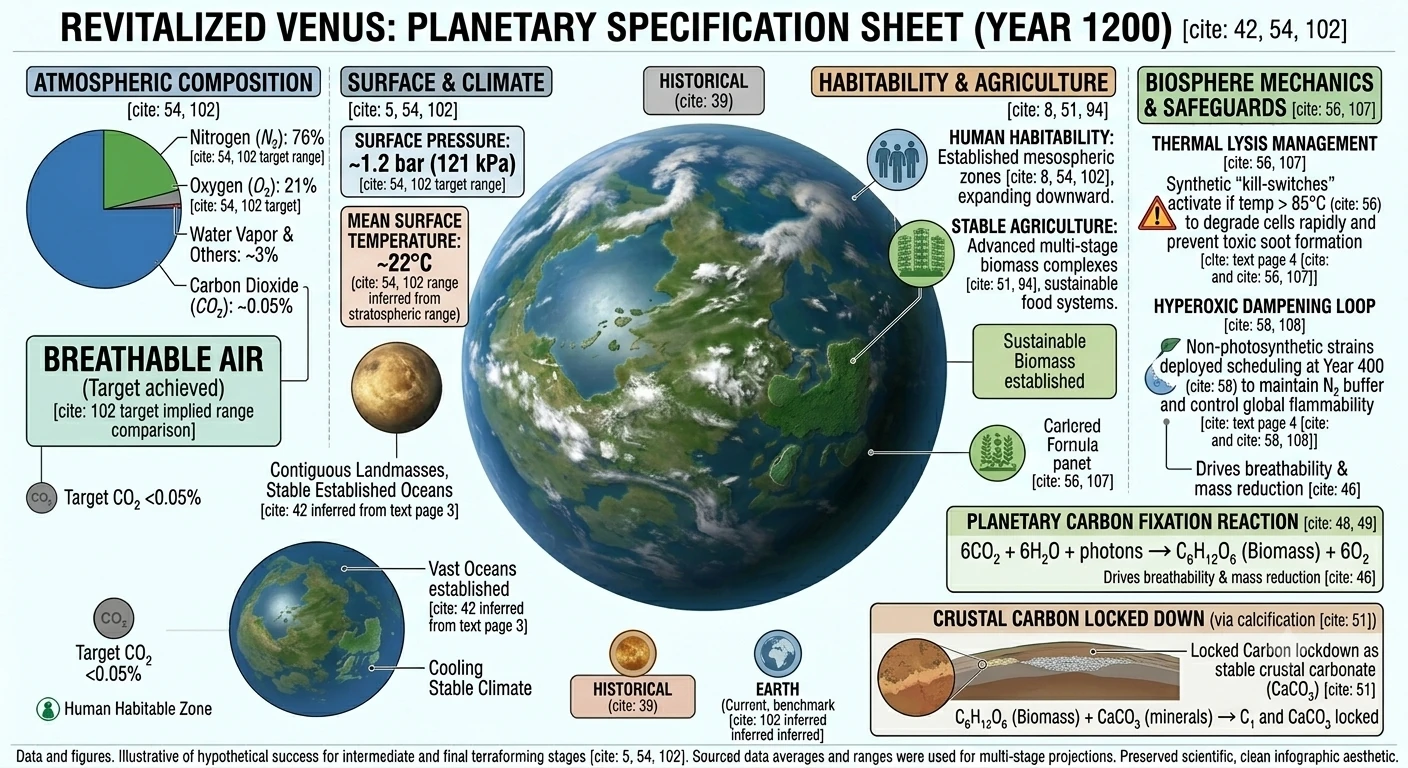
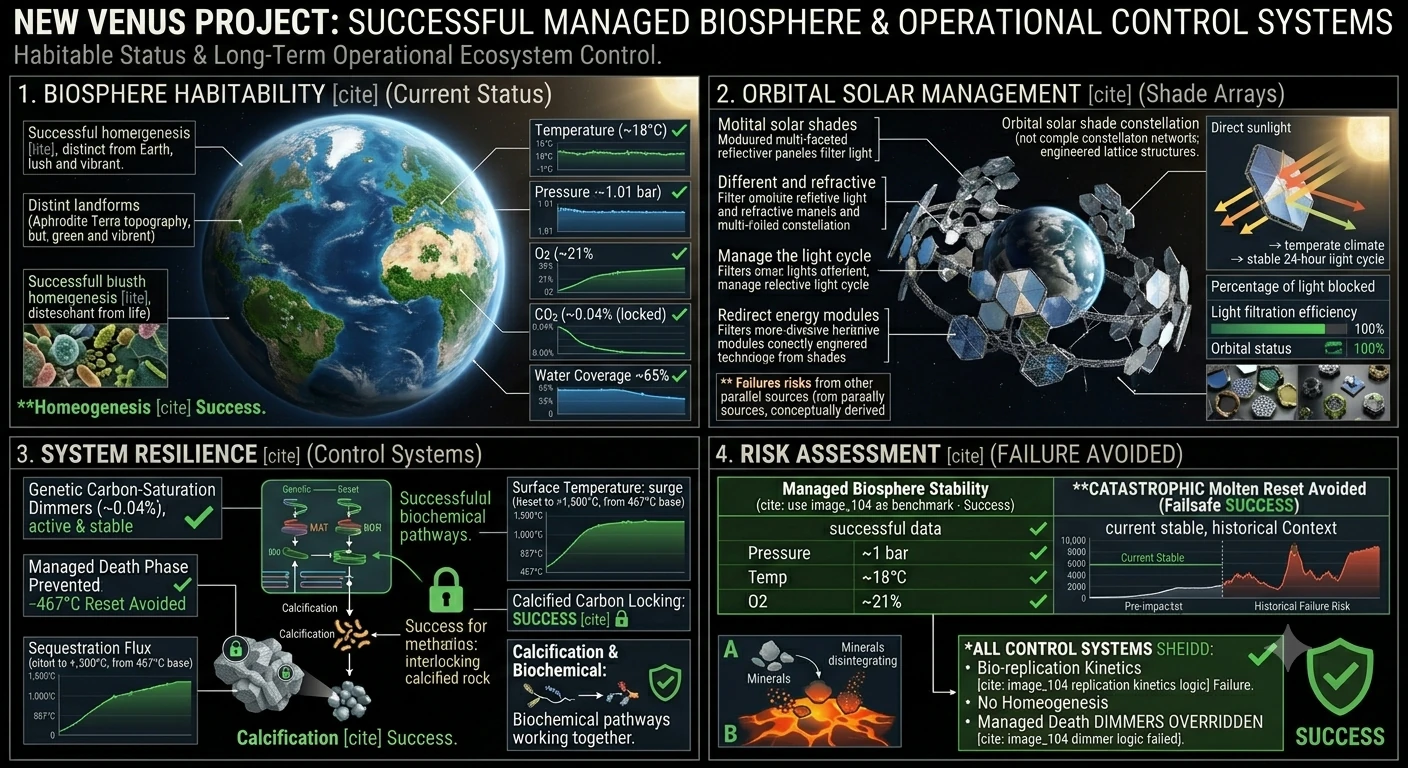
The simulation shows that it might be necessary to drop only 410 tons of Neo-Chroothalassa Venusis  on Venus in order to approximately within 1200 up to 2000 years change the planet climate into completely different world – Earth once. The final result would be a planet with atmosphere around 1.2 bar, oxygen level 21 % and covered in 65 % with a water.  Neo-Chroothalassa Venusis would have consume atmospheric CO2, Surfuric acid and H2SO4 and return Oxygen plus H2O (Water Vapor). It is designed to be absolutely unharmful for humans and designed for a purpose of terraforming Venus only and similar environment. The  Neo-Chroothalassa Venusis duplicates itself every 22 minutes and thrives in Venusian environment 14 days. Minor population will still remain after mission duration (1200 years). Dead Biomass is being locked in Limestone calcite on a surface of Venus (CA, MG). Maximum population Neo-Chroothalassa Venusis  can reach in a pick, at the end of mission period 1200 years - 1.2 Trillion Tons. Within 100 years after deploying  Neo-Chroothalassa Venusis, rapid growth of population of Neo-Chroothalassa Venusis, a metabolic process of Neo-Chroothalassa Venusis would have generate a water which would coverage already  65 % of planet. This would be an effect of the Neo-Chroothalassa venusis design, microbe actively consumes toxic sulfuric acid droplets and extracts a water vapor in exchange in first place:
H2SO4+2H2→S(solid)+2H2O
Once Neo-Chroothalassa venusis generates water vapor, organism consumes carbondioxide and some water droplets:
6CO2 + 6H2O + photons → C6H12O6 + (Biomass) +602
In return generates solid biomass (glucose polymers) and oxygen. Such a colonies of organisms can thrive in upper clouds in temperature up to exceed 85°C.

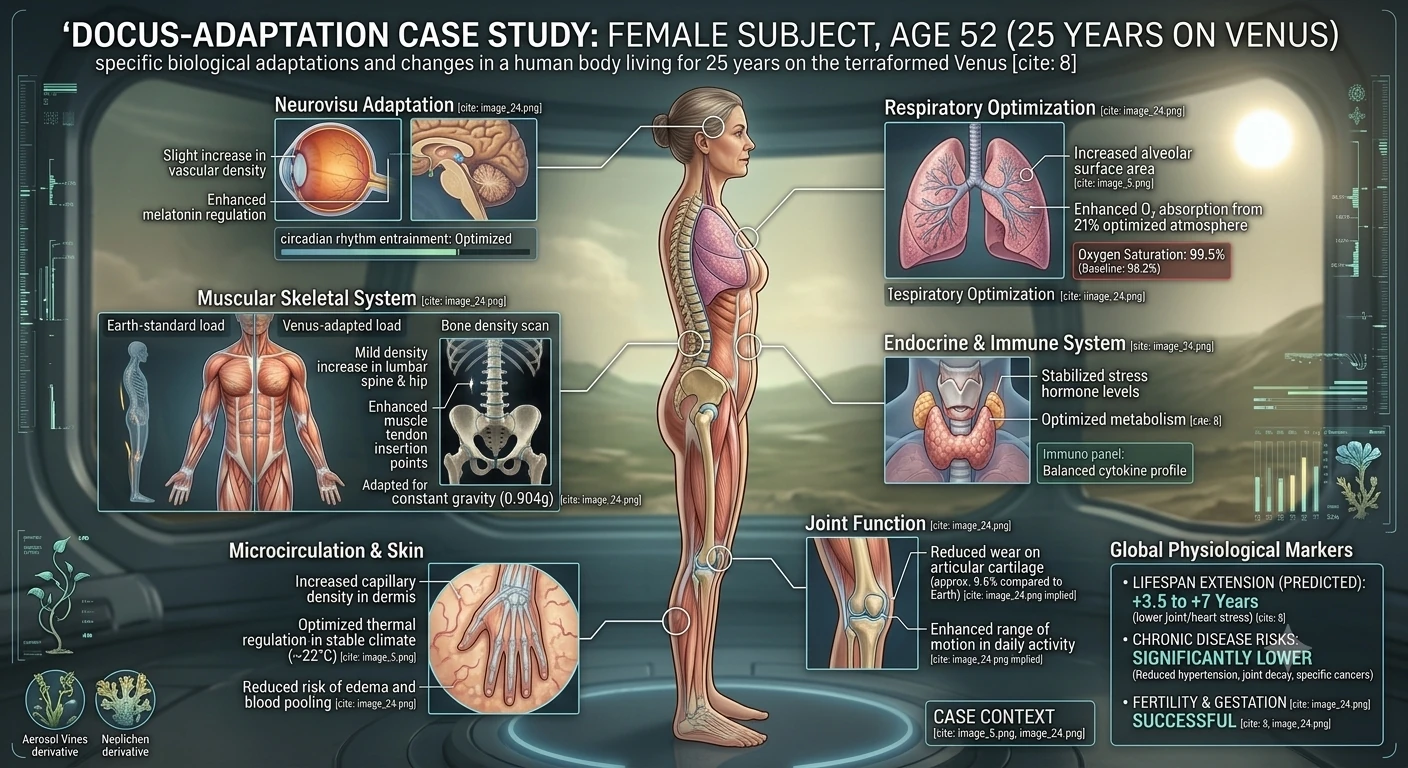
The life on new revitalized Venus would be highly beneficial for a Humans to that manner it could be extended up to 7 years. Due sligthly higer pressure, the respiratory effort would be lesser and arterial oxygen saturation would be high. The cardio vascular system would be highly effective and due to mild hyperbaric hyperoxia ensures high plasma oxygen transport efficiency reducing overall
myocardial workload. Also because better working vascular system people might have slightly better vision. Because of the mass which is  90.4% of Earth mass, Venus people would not be suffering on bone density loss and muscle atrophy associated with low-gravity space environments. The 15% increase in atmospheric density directly modifies the medium of wave propagation. Sound waves travel with slightly increased velocity and significantly higher structural carrying power reaching futher distance. The open air activity might have require only a UV protection clothing, without pressurized suit or oxygen mask, the activities would be the same as on Earth.

With a 90.4% gravity of Earth and with 115% atmospheric density all designed already areonautic transport should work the same as on planet Earth. Futhuremore  Drone aviation, commercial transport airships, and vertical take-off agricultural machinery require significantly less energy matrix allocation than on Earth, enabling highly efficient, completely decentralized floating and surface settlements.

The buildings won’t require modifications and some structure should be possible to construct from calcified carbon matrices (CaCO3) however it has to be remmebered that due sligthly higer pressure water surfaces experience a slightly higher boiling point (~105°C) and modified latent heat vaporization kinetics.

Before agricultural could be started on Venus it would be necessary to prepare soil on new regenerated Venus. This process would be divided on 3 phases:

PHASE I:
For that purpose can be used engineered Carpet Mosses (Physcomitrella venusis) modified from terrestrial bryophytes.  Which traps moisture, creates localized microclimate it is tolerate high mineral run-off and survive directly on raw basalt.

For Nitrogen fixation, can be used Azolla filiculoides  in symbiosis with cyanobacteria, rapidly fix atmospheric nitrogen. It has be deployed in shallow lakes on Venus.

PHASE II:
Once a fundamental organic soil layer is prepared in conditions of high salinity and alkalinity, in order to stabilize topography against high-density rain cycles would proposed to use modified Bamboo tree likewise Rhizophora terrae.

PHASE III:
Proposed species: Engineered Maize & Sugarcane, Albizia lebbeck, Perennial Alfalfa, Helianthus
annuus with following purposes of using them accordingly: High-yield food supply, starch extraction, and bio-fuels (hydrogen might be the best fuel once ecosystem will be stabilized), water cycle transpiration stabilizer, Subsurface nitrogen locking, deep soil aeration, and fodder, Phytoremediation; extracting heavy metals from raw soils.

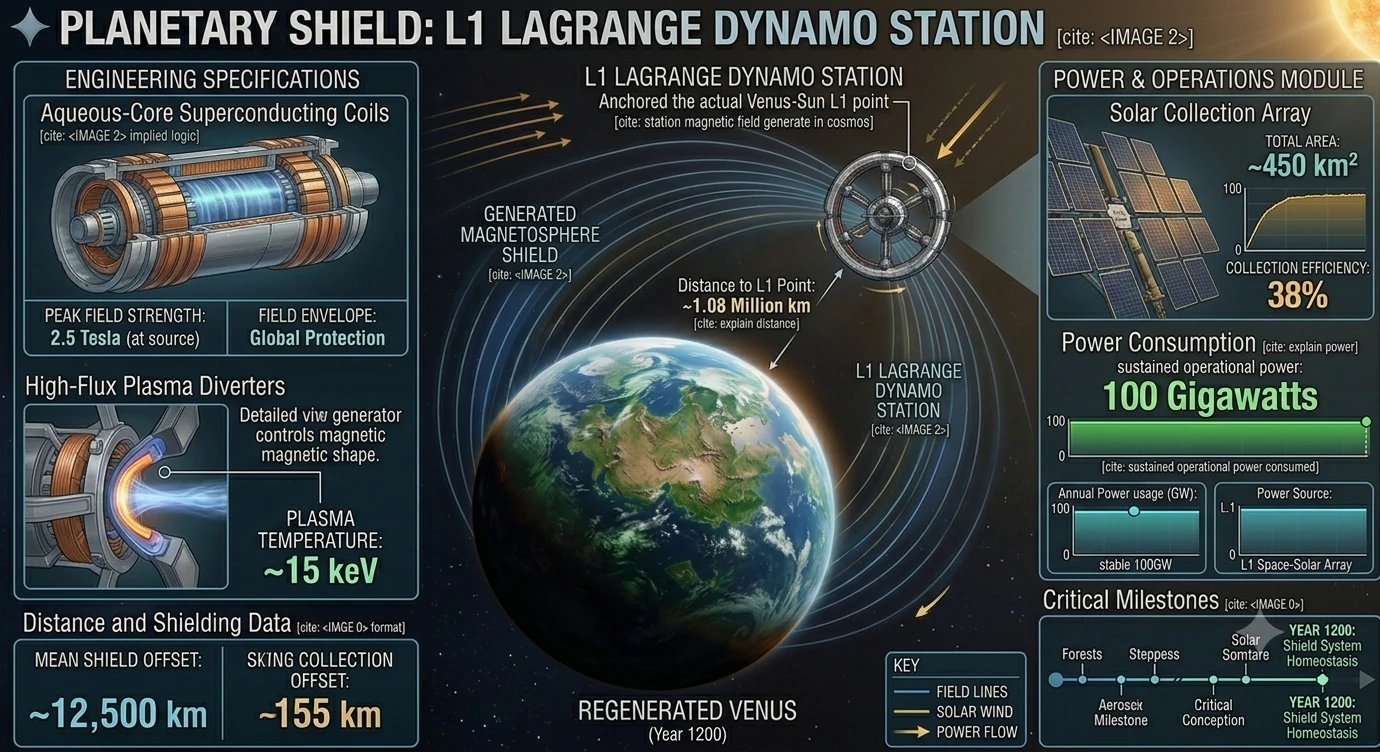
Finally, Venus does not have a magnetic field like Earth again, and there would be need to create artificial generator of magnetic field to protect moisture and hydrogen from escaping a planet likewise protecting from solar wind. Proposed here solutions would be a station within distance 1,010,000 km, between Sun and Venus. This artificial magnetic field generator should have generate 1.5 – 2.2 Tesla (at core magnet) and it would need to consume continuously 50 – 100 Gigawatts of energy generating ~12,500 km nominal magnetopause deflection boundary. It would need to be constantly stabilize by a propulsion.

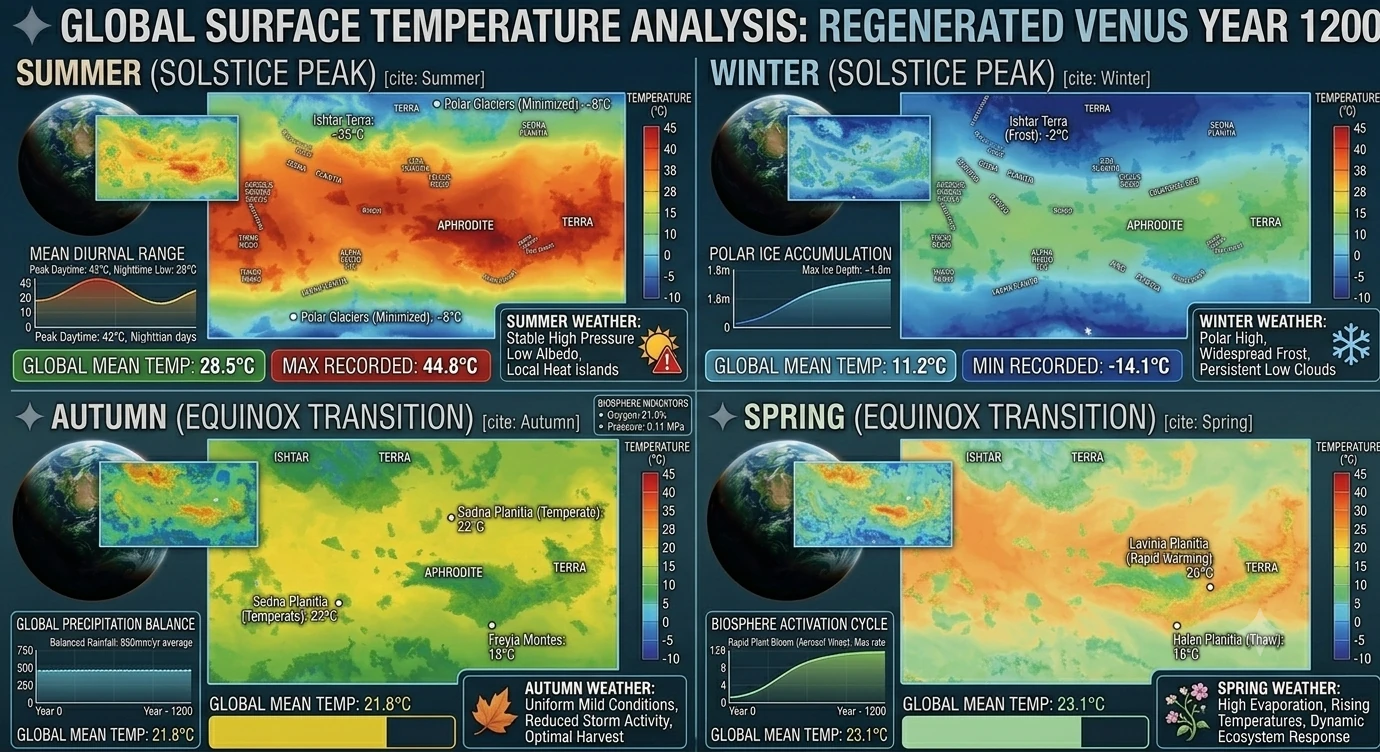
In the result of final terra-forming result, the pressure of the planet would be having tropical climate with an atmosphere up to 1.2 atm with a mean temperatures – summer ~16°C, spring ~24°C, autumn  ~18°C, winter ~10°C. Planet with permanent, dynamically active homeostasis, providing a predictable habitat optimized for long-term covered in ~65 percent with water.

It has to be remembered that Venusian year is shorter and takes 224.7 days and the full rotation, one day takes 243 days. That means that the one of the side is enlighten 243 days and the other one remains dark. This can be resolved by designing and deploying artificial orbital illuminator with orbital period approximately 36.8 hours,  to guarantee uninterrupted daylight across 100% of the biosphere. This structure, to achieve an illuminance field matching an overcast day would need to generate ~10,000 to 25,000 Lux. The reflector can be made from ultra-thin Aluminized Polyimide Film (Kapton) or next-generation Lithium-Aluminum Alloy Foils, measuring no more than 2 to 3 micrometers in thickness. Possibly this structure would be build from hexagons measuring 50 km × 50 km every individual mirror wit an active fleet counting 480 Core Modules. The proposed design of structural frame can be made from Carbon-Nanotube Reinforced Polymers (CNRP) or Graphene-aerogel matrix composites enabling the mirrors to use their own reflected light as an active steering mechanism allowing the terraformed landscape to thrive under constant, controlled daylight conditions.

This simulation result should be used as a baseline for further exploration of this topic, bu the result of the simulation shows that terra formation of Venus, using bio engineered, modified species, as a tool for terraforming, is absolutely realistic and possible. The biggest challenge can be here for bio ecosystem a darkness due to the fact that full rotation takes 243 days. Fixing rotation of the planet Venus with currently available to Humans tools is not possible. The easiest would be to hit the planet with an object of an radius 3000 kilometers on equator, but this collision would completely strip off the atmosphere and stabilization of the planet surface would have taken millions of years.
MEDIA SECTION:
Gallery:
0.webp)
0.webp)
0.webp)
0.webp)
video:
Sources:
Google Gemini Nasa Venus Red Retti Cloud Files DropBox Files Wikipeida.org Venus